Beginner Blacksmith Kit: Just Add Heat and Beat
There is something primal about blacksmithing. The heat of the forge, the ring of the anvil, and the physical satisfaction of shaping glowing steel with your own hands. It’s an ancient art form that is seeing a massive resurgence, and for good reason—it’s the ultimate “rugged” hobby.
But if you’re looking to get started, the barrier to entry can feel high. Do you need a $2,000 anvil? A complex power hammer? No. You just need the basics.
The “Heat and Beat” Philosophy
When you’re starting out, don’t overthink the gear. You need three things:
- Heat: A way to get steel up to a glowing orange (about 2,000°F).
- Anvil: A hard, flat surface to strike against.
- Hammer: A way to deliver force.
Everything else—tongs, aprons, specialized punches—is just there to make those three things easier.
Goplus 5-Piece Blacksmith Hammer Set
A comprehensive set of forged steel hammers including ball pein, cross pein, and a sledgehammer. Perfect for shaping and demolition.
Essential Gear for the New Smith
1. The Hammer
Your hammer is your primary interface with the metal. For beginners, a 2lb to 3lb Cross Pein hammer is the gold standard. The flat face moves metal generally, while the “pein” (the wedge-shaped side) allows you to “draw out” or spread the metal in a specific direction.
2. Tongs
You can’t hold 2,000-degree steel with your hands (even with gloves). A good pair of Wolf Jaw tongs is your best bet for a first pair. They are designed to hold various shapes—round, square, and flat—securely.
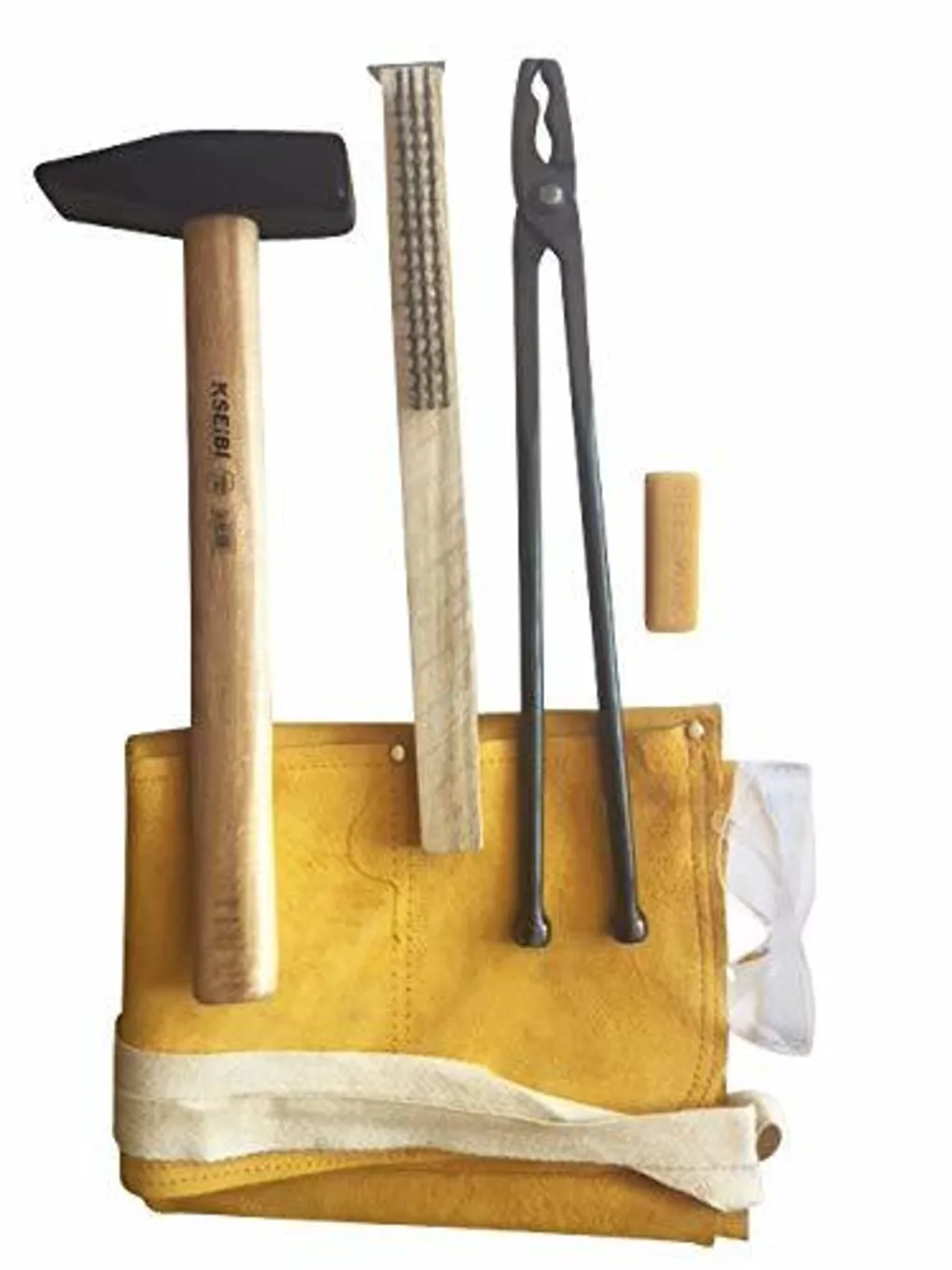
Whitlox Hammer & Tongs Starter Kit
The ultimate bundle for beginners. Includes a cross pein hammer, wolf jaw tongs, leather apron, steel brush, and safety glasses.
3. The Anvil
You don’t need a 200lb London-pattern anvil to start. A heavy block of scrap steel, a section of railroad track, or a budget-friendly cast-steel anvil will get you through your first 100 projects. Look for mass and rebound. The more mass under your hammer blow, the more work you get done with less effort.
Safety: Non-Negotiable
Blacksmithing is inherently dangerous. You are working with extreme heat and heavy swinging objects.
- Eye Protection: Always wear impact-resistant safety glasses.
- Natural Fibers: Only wear cotton, wool, or leather. Synthetic fabrics (like polyester) will melt to your skin if a spark hits them.
- Leather Apron: A thick leather apron protects your torso from scale and sparks.
Ready to fire up the forge?
The Blacksmith's Log
Hammer control, heat treating, and project ideas. Read more in our blacksmithing archive.