Knife Grinds & Sharpening: The Ultimate Guide
A knife is only as good as its edge. Whether you are a chef, a bushcrafter, or a stay-at-home dad making mac n’ cheese, a dull knife is a dangerous knife.
This guide covers the two pillars of edge geometry: The Grind (the shape of the blade) and Sharpening (how to maintain it).
Part 1: Understanding Knife Grinds
The “grind” refers to how the blade is thinned to create the cutting edge. It dictates how the knife behaves, how strong it is, and how easy it is to sharpen.
1. The Scandi Grind
The Scandi (Scandinavian) grind is essentially a large “V”. The bevel runs flat from the middle of the blade down to the edge with no secondary bevel.
- Best For: Bushcraft and woodworking.
- Pros: Extremely strong edge; very easy to sharpen (you just lay the bevel flat on the stone).
- Cons: Not the best slicer for thick materials (like apples) as it acts like a wedge.
2. The Hollow Grind
A Hollow grind has a concave scoop removed from the blade, creating a very thin edge. Think of an old-school straight razor.
- Best For: Skinning, slicing, and shaving.
- Pros: Incredible slicing performance; easy to resharpen because the edge stays thin.
- Cons: The edge is fragile and can chip if used on hard materials.
Part 2: Sharpening vs. Honing
Most people think “honing” and “sharpening” are the same thing. They are not.
Sharpening
Sharpening removes metal. You are grinding a new edge onto the blade. You do this when the knife is actually dull.
Honing
Honing realigns the edge. On a microscopic level, a sharp edge can roll over or curl. Honing pushes it back to center. You do this before every use to maintain the edge.
Utopia Kitchen 10-Inch Honing Steel
A simple, effective rod to keep your kitchen knives aligned. Use it before every meal prep.
Part 3: Types of Sharpening Stones
When it’s time to actually remove metal, you need a stone. Here is the breakdown:
1. Water Stones
Synthetic stones that you soak in water. They cut fast and are the favorite of most chefs.
- Pros: Fast cutting, huge variety of grits.
- Cons: Need to be flattened (lapped) occasionally; messy.
2. Oil Stones
The classic American stone (Arkansas stones). They use oil as a lubricant.
- Pros: Very hard and durable; give a great polish.
- Cons: Cut slowly; oil can be messy.
3. Diamond Plates
Metal plates with industrial diamonds embedded in them.
- Pros: Stay flat forever; cut extremely fast; sharpen any steel.
- Cons: Can leave deep scratches if you aren’t careful; expensive.
Sharp Pebble Premium Whetstone Kit
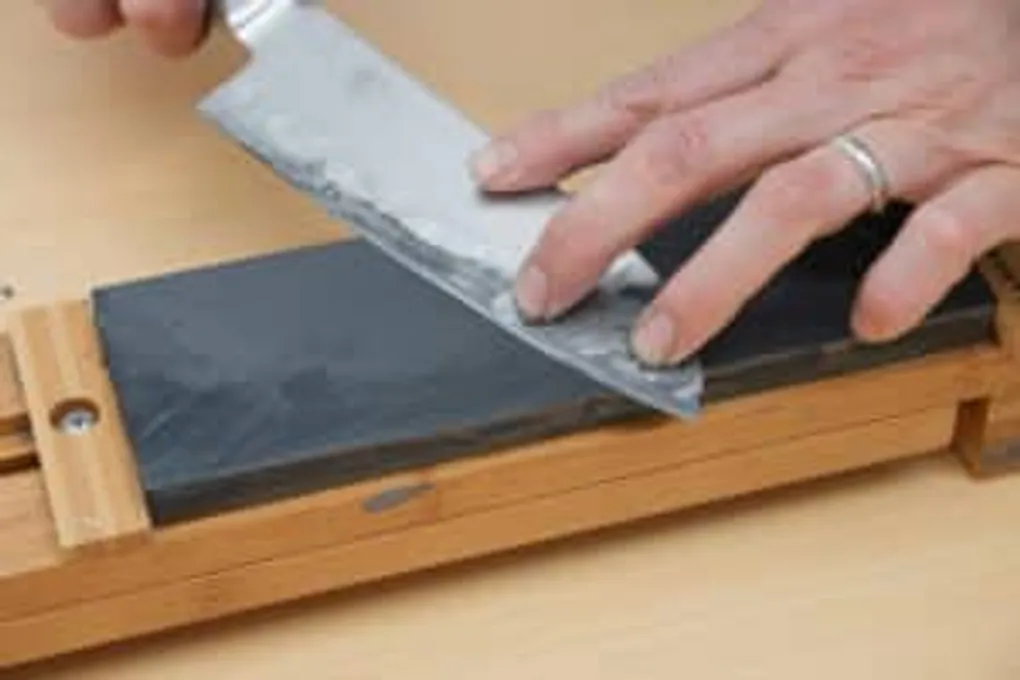
The complete starter kit. Includes 1000/6000 grit water stones, a bamboo base, and an angle guide.
The Verdict
If you are just starting out, get a Water Stone setup (1000/6000 grit) and a Honing Steel.
- Use the 1000 grit to set the edge.
- Use the 6000 grit to polish it.
- Use the Steel daily to keep it straight.
Ready to forge your own blade?
The Blacksmith's Archive
From anvils to hammers, learn what it takes to move hot metal and create your own tools.