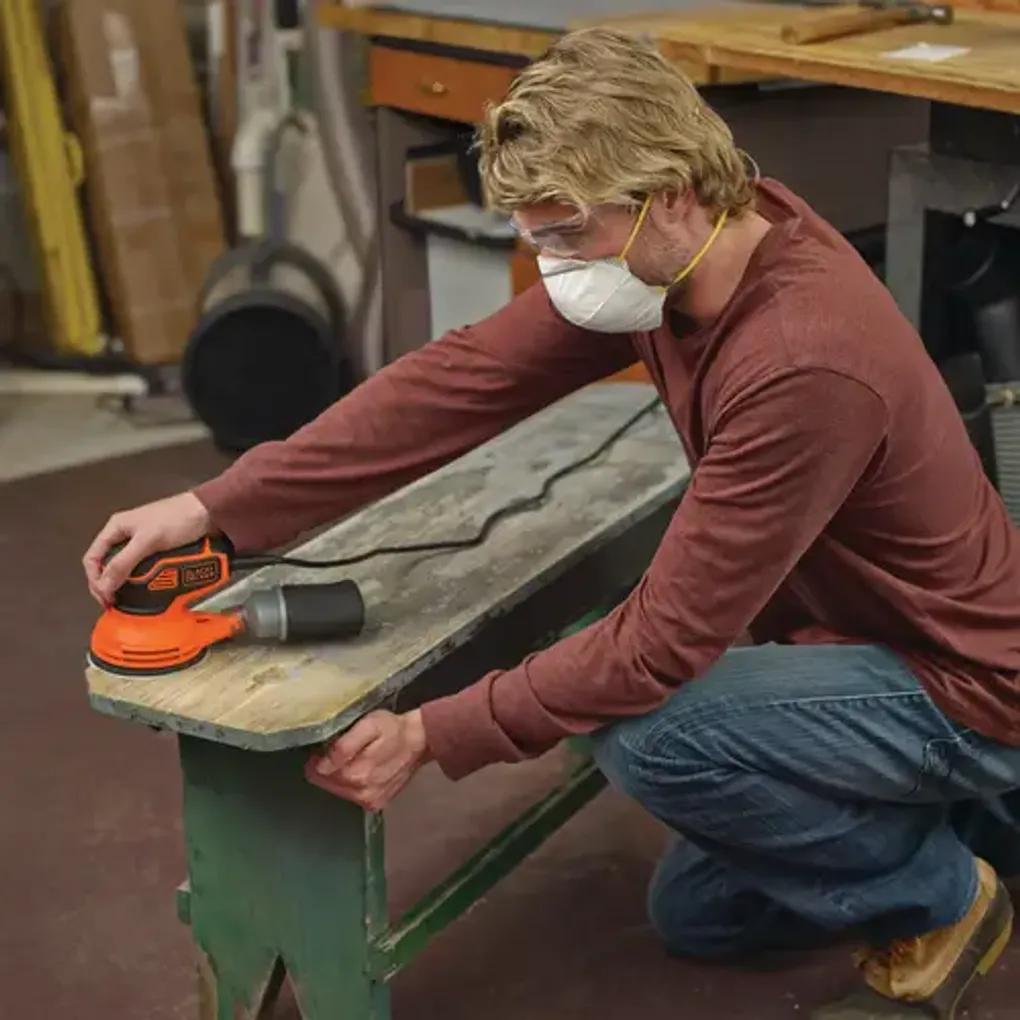
Random Orbit Sander Guide: What It Is & Which to Buy
If there is one tool that separates a “DIY project” from a professional piece of furniture, it’s the sander. Specifically, the Random Orbit Sander.
For years, I struggled with those ugly “swirl marks” and cross-grain scratches that show up the second you apply a dark stain. I thought I was just bad at sanding. Turns out, I was just using the wrong tool.
What is a Random Orbit Sander?
A Random Orbit Sander (often called a Rotary Sander) uses a circular sanding pad that moves in two ways simultaneously:
- It spins in a circle.
- It oscillates in small, random orbits.
This “random” motion is the secret sauce. Because the pad never follows the same path twice, it leaves an incredibly smooth finish with almost zero visible scratch patterns.
Black & Decker BDERO100 Random Orbital Sander
The perfect entry-level sander for any home workshop. Compact, high-torque, and features an efficient dust collection system.
Random Orbit vs. Standard Orbital Sander
It’s easy to get these confused, but the difference is huge when it comes to the final “vibe” of your project.
1. The Pad Shape
- Random Orbit: Circular. Uses 5-inch or 6-inch discs.
- Standard Orbital (Sheet Sander): Square or Rectangular. Uses standard sheets of sandpaper cut to size.
2. The Finish
- Random Orbit: Leave a swirl-free finish. High material removal rate.
- Standard Orbital: Better for getting into tight 90-degree corners (because of the square pad), but prone to leaving “pigtail” marks if you aren’t careful.
4 Essential Uses for Your Sander
- Stripping Old Paint: Use a low grit (60-80) to blast through layers of old varnish or paint.
- Smoothing Raw Timber: Prep your boards before assembly to ensure they are perfectly flat.
- Refinishing Furniture: Give that thrift store find a new life by sanding it back to raw wood.
- Large Scale Projects: Decks, patios, and staircases become much less daunting with a power sander in hand.
Pro Tips for a 10/10 Finish
- Don’t Press Down: Let the weight of the tool do the work. Pressing down actually slows the orbits and creates more heat, which can gum up your sandpaper.
- The “Rule of 50”: When moving up in grit, don’t skip more than 50% of the previous grit. (e.g., 80 -> 120 -> 180).
- Vacuum Often: Use the onboard dust bag, but if your sander has a vacuum port, hook it up to a shop vac. Removing the dust as you go keeps the sandpaper sharp and the air clean.
Building your first workshop?
The Efficient Workshop
Don't waste money on tools you don't need. Check out our archive for more no-nonsense tool guides.