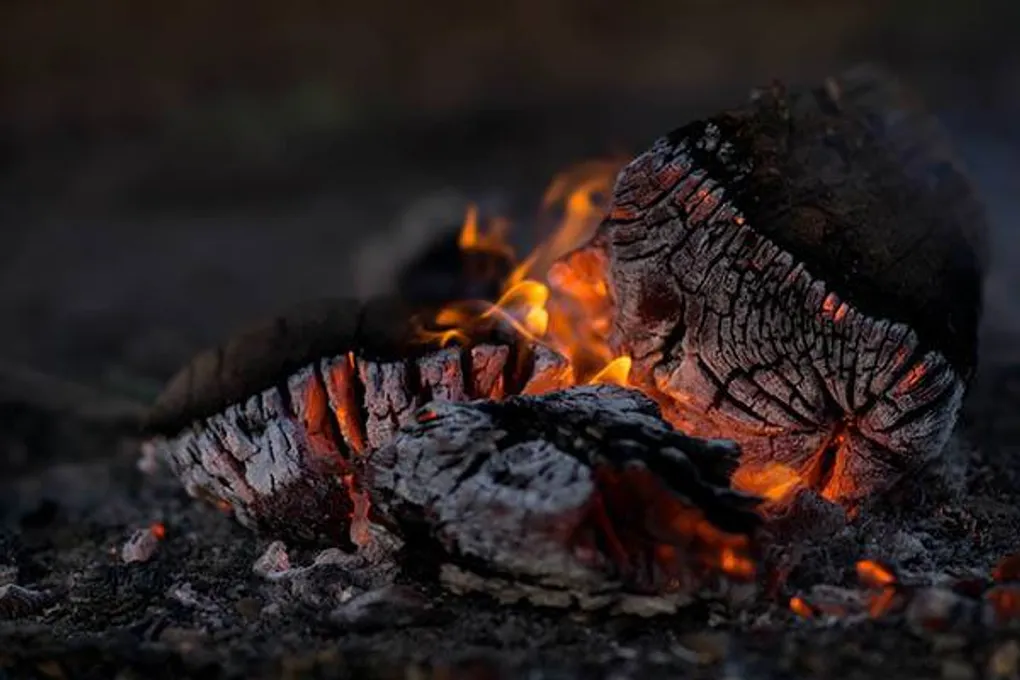
The Forge Fuel Guide: Propane vs. Charcoal
Fire is your primary tool. Without it, you’re just a guy hitting cold metal with a hammer (and annoying the neighbors).
When setting up your first forge, you have two main paths: Solid Fuel (Charcoal/Coal) or Gas (Propane).
Charcoal: The Traditionalist’s Choice
Charcoal burns hot. With enough air, it can easily reach the 2,300°F+ needed for forge welding.
- Pros: Cheap (you can make it yourself), authentic feel, localized heat.
- Cons: Dirty, requires constant tending, sparks.
Pro Tip: Use Lump Charcoal, not briquettes. Briquettes have binders that clog up your airflow and don’t burn as hot.
Propane: The Modern Standard
For most home smiths, propane is the winner. It’s clean, consistent, and available at every gas station.
How Much Gas Does a Forge Use?
It depends on your PSI and insulation, but a typical single-burner forge running at 8 PSI will burn through a 20lb BBQ tank in about 6-8 hours.
Hell's Forge Portable Propane Forge
The best entry-level gas forge on the market. Double burner option available, but the single burner is perfect for knives.
Turbocharging Your Heat
If you are building your own burner, you might be tempted to just stick a hardware store torch in a hole. Don’t. They don’t have the BTU output to heat a forge chamber efficiently.
You need a Venturi burner (like the one we cover in our DIY Burner Guide) or a high-output torch tip like a TurboTorch.
TurboTorch Extreme
If you need a handheld torch that can actually heat metal for bending, this is the one. Swirl combustion technology for max heat transfer.
Maintenance: Cleaning Your Burner
Propane isn’t perfectly clean. Over time, waxy buildup can clog your nozzle.
- Remove the nozzle.
- Boil it in water for 10 minutes.
- Dry it thoroughly (compressed air or oven).
Ready to build your own heat source?
The DIY Burner Guide
Don't want to buy off the shelf? Learn how to build a high-efficiency Venturi burner from hardware store parts.